Repatriation of Profits from Overseas Subsidiaries: Key Planning Considerations
Explore how overseas profits can be repatriated through dividends, interest, royalties, or other payments while managing tax, compliance, cash flow, and foreign-exchange requirements.
By CA Aswin
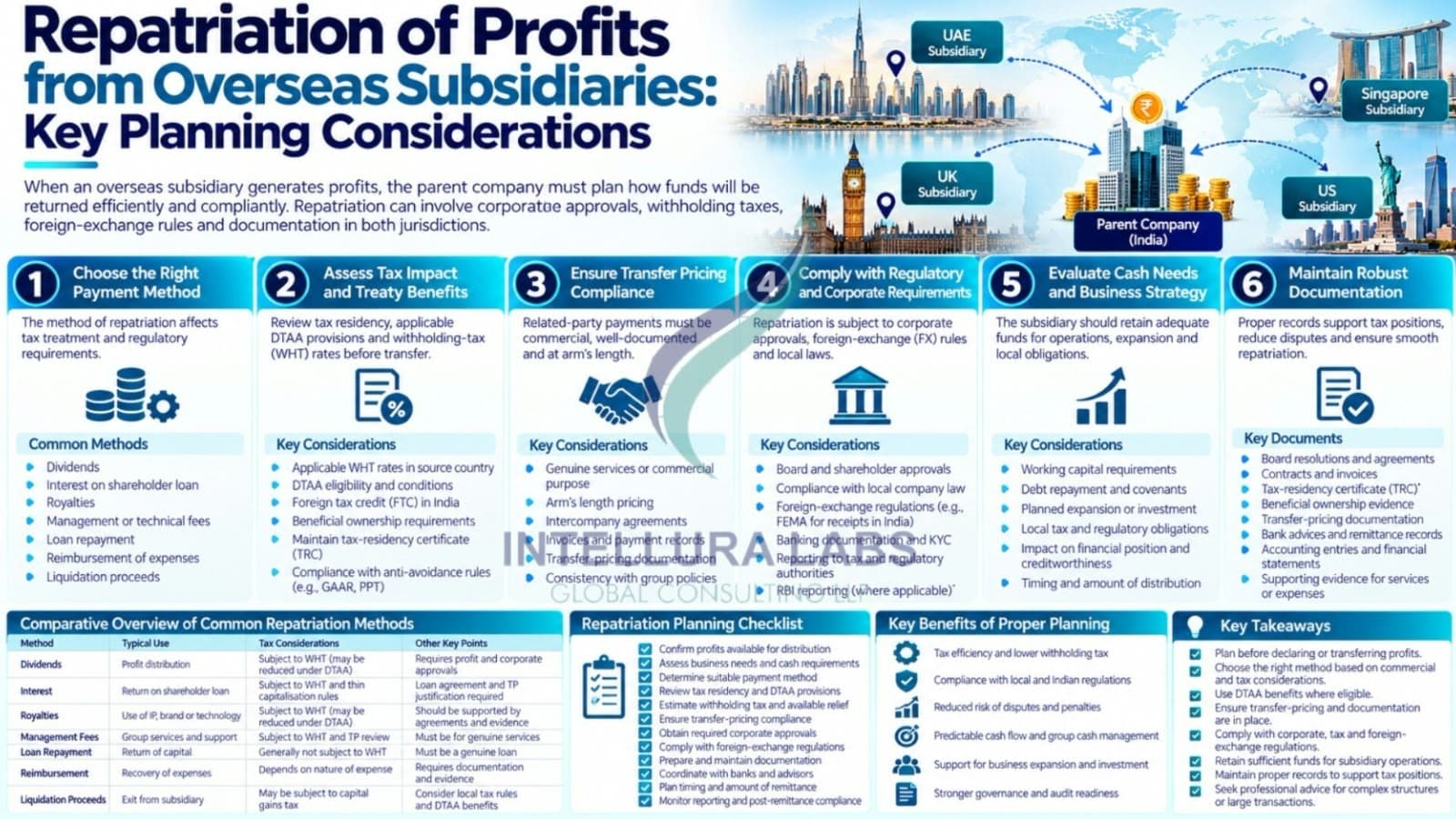
Repatriation of Profits from Overseas Subsidiaries: Key Planning Considerations
When an overseas subsidiary generates profits, the parent company must plan how funds will be returned efficiently and compliantly. Repatriation can involve corporate approvals, withholding taxes, foreign-exchange rules and documentation in both jurisdictions.
The first consideration is the payment method. Dividends, interest, royalties, management fees, loan repayment and reimbursement of legitimate expenses may create different tax and regulatory outcomes. The method should reflect the commercial relationship and nature of the payment.
Tax residency, applicable treaties and withholding-tax provisions should be reviewed before transfer. The parent company should assess foreign-tax credits or treaty relief and maintain required certificates, agreements and beneficial-ownership evidence.
Related-party payments must be supported by genuine services, appropriate pricing and transfer-pricing documentation. Payments should also comply with foreign-exchange regulations, banking requirements and local corporate procedures.
Cash requirements must be considered before distribution. The subsidiary may need funds for working capital, debt repayment, expansion or local obligations. A distribution that weakens its financial position may create operational risk.
Careful planning aligns cash needs, tax efficiency, compliance and strategy. Proper records and professional review can make profit repatriation more predictable and reduce disputes. This also supports orderly group cash management.