Internal Controls for Startups: Building Discipline Before Problems Arise
Discover the essential internal controls startups need to protect cash, prevent errors, improve accountability, and build investor confidence as they grow.
By CA Aswin
Internal Controls for Startups: Building Discipline Before Problems Arise
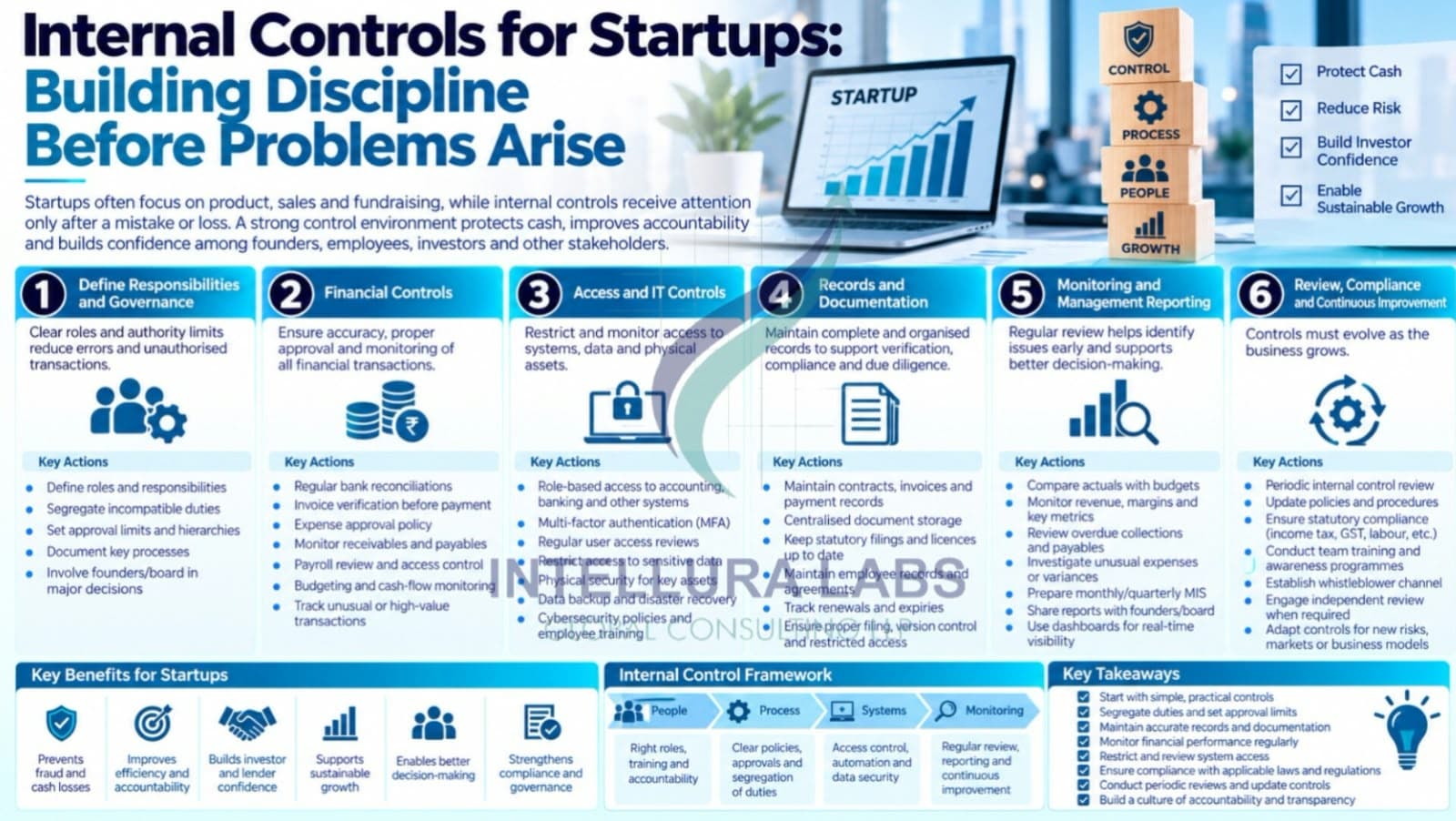
Startups often prioritise product, sales and fundraising, while internal controls receive attention after a mistake or loss. Basic controls can protect cash, improve accountability and build confidence among founders, employees and investors.
The first step is defining responsibilities. No person should control every stage of purchasing, payment, recording and approval. Clear authority limits and separated duties reduce errors, conflicts and unauthorised transactions.
Financial controls should include bank reconciliations, approval procedures, expense policies, invoice verification, payroll review and monitoring of receivables and payables. Access to banking, accounting systems and sensitive data should match roles.
Startups should maintain records for contracts, invoices, customer payments, statutory filings and employee information. A central document system supports verification and due diligence.
Management reporting should compare budgets with actual results. Unusual expenses, margin changes, overdue collections and cash-flow pressures require prompt review. Controls should be practical enough to follow consistently.
As the business grows, controls must evolve. Periodic reviews, training, whistleblower channels and independent checks can strengthen the framework.
Internal controls are not bureaucracy. They are operating disciplines that prevent avoidable losses, improve risk response and build a stronger foundation for sustainable long-term growth.