DTAA Planning: How Cross-Border Businesses Can Reduce Tax Uncertainty
Spot the financial warning signs that can threaten business stability, from declining margins and overdue receivables to rising debt and weak cash flow.
By CA Aswin
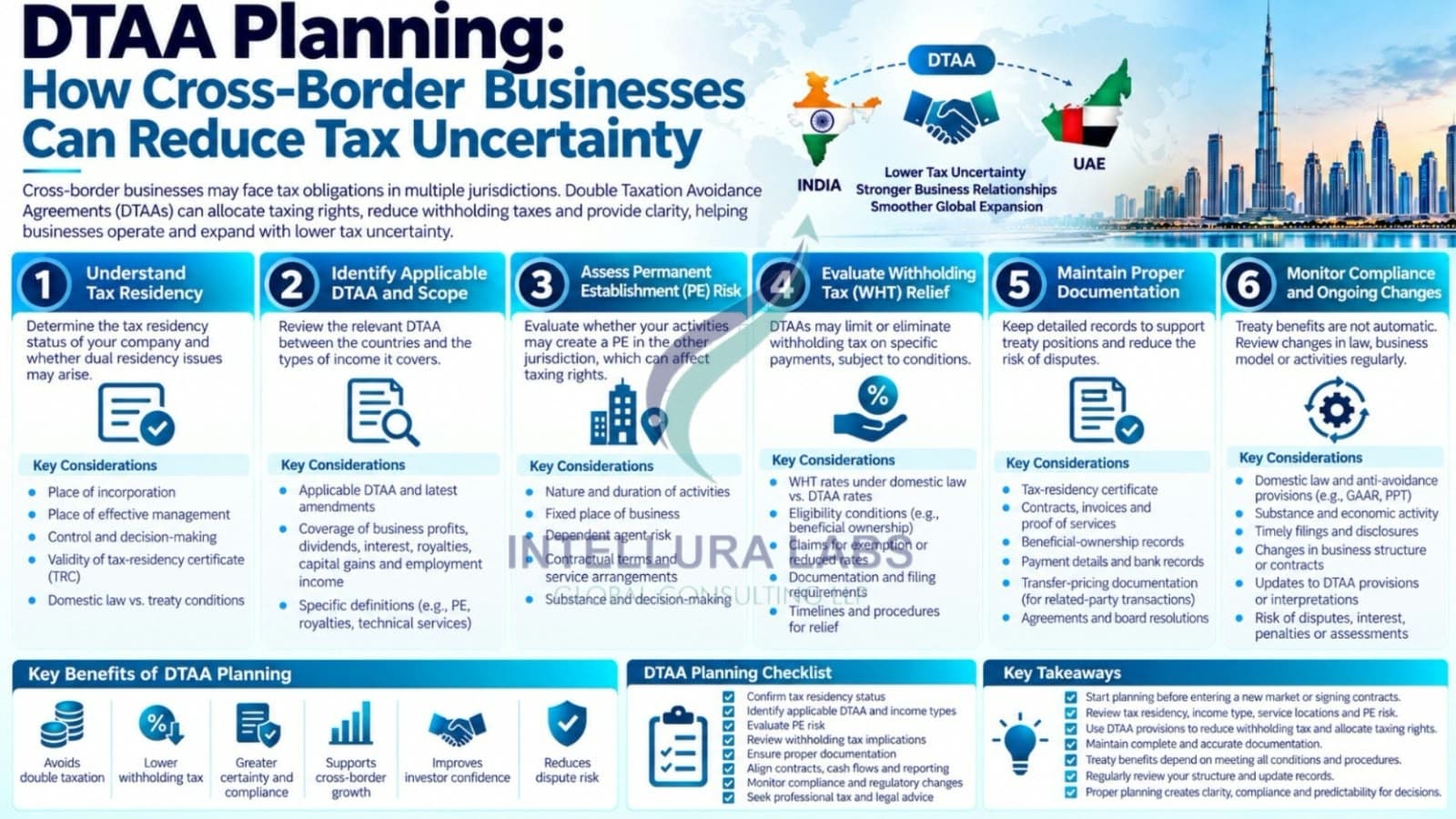
DTAA Planning: How Cross-Border Businesses Can Reduce Tax Uncertainty
Cross-border businesses may face tax obligations in multiple jurisdictions. Income may be taxed where a company is resident, services are performed or a permanent establishment exists. Double Taxation Avoidance Agreements, or DTAAs, can allocate taxing rights and reduce uncertainty.
Planning should begin before entering a market or signing contracts. Businesses should review tax residency, income type, service locations, management activities, treaty provisions and the risk of creating a permanent establishment.
A DTAA may address business profits, dividends, interest, royalties, capital gains and employment income. It may limit withholding tax or provide exemption or foreign-tax credit relief, subject to conditions and relief procedures.
Documentation is essential. Maintain tax-residency certificates, contracts, invoices, proof of services, beneficial-ownership records, payment details and evidence supporting treaty claims for material transactions. Related-party transactions may require transfer-pricing records.
Treaty benefits are not automatic. Domestic law, wording, anti-avoidance provisions, substance requirements and procedures must be considered together. Incorrect claims can lead to withholding disputes, interest, penalties or assessments in each jurisdiction.
Early review helps align contracts, cash flows and reporting with the intended structure. Proper planning does not eliminate tax; it creates clarity, compliance and predictability for decisions.