Related-Party Transactions: Why Growing Businesses Need Clear Policies
Learn how clear related-party transaction policies can improve transparency, strengthen governance, manage conflicts, and support tax and regulatory compliance.
By CA Aswin
Related-Party Transactions: Why Growing Businesses Need Clear Policies
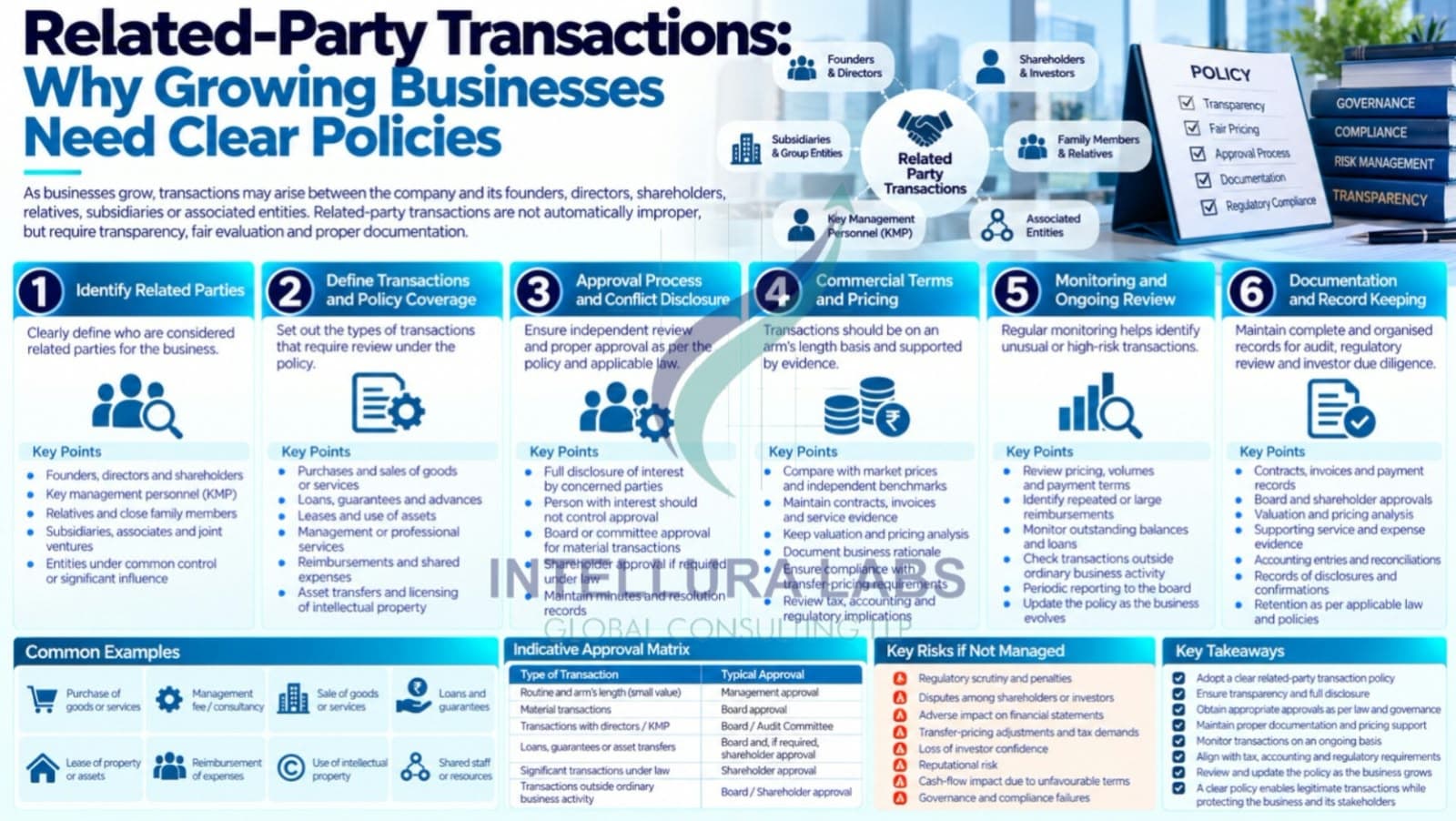
As businesses grow, transactions may arise between the company and founders, directors, shareholders, relatives, subsidiaries or associated entities. Related-party transactions are not automatically improper, but require transparency, fair evaluation and documentation.
A policy should define related parties, transactions requiring review and approval authority. It should cover purchases, sales, loans, guarantees, leases, management services, reimbursements, asset transfers and shared expenses.
The policy should require conflict disclosure. A person benefiting from a transaction should not control approval without independent review. Material transactions may require board or shareholder approval under applicable law and governance arrangements.
Commercial terms should be supportable. Maintain contracts, invoices, valuation records, pricing analysis, service evidence and payment details. Transactions should also be assessed for tax, transfer-pricing, accounting and regulatory requirements.
Regular monitoring helps identify unusual pricing, repeated reimbursements, unpaid balances or transactions outside ordinary business activity. These issues can affect cash flow, financial reporting, investor confidence and due diligence.
A clear policy protects the business and its stakeholders. It does not prevent legitimate transactions; it creates a consistent process for disclosure, approval, documentation and review. As the business expands, related-party controls strengthen governance and reduce disputes for all material transactions.