Fraud Prevention in Small and Mid-Sized Businesses: Practical Internal Controls
Discover practical fraud-prevention controls that help small and mid-sized businesses protect cash, data, payments, and operations from avoidable losses.
By CA Aswin
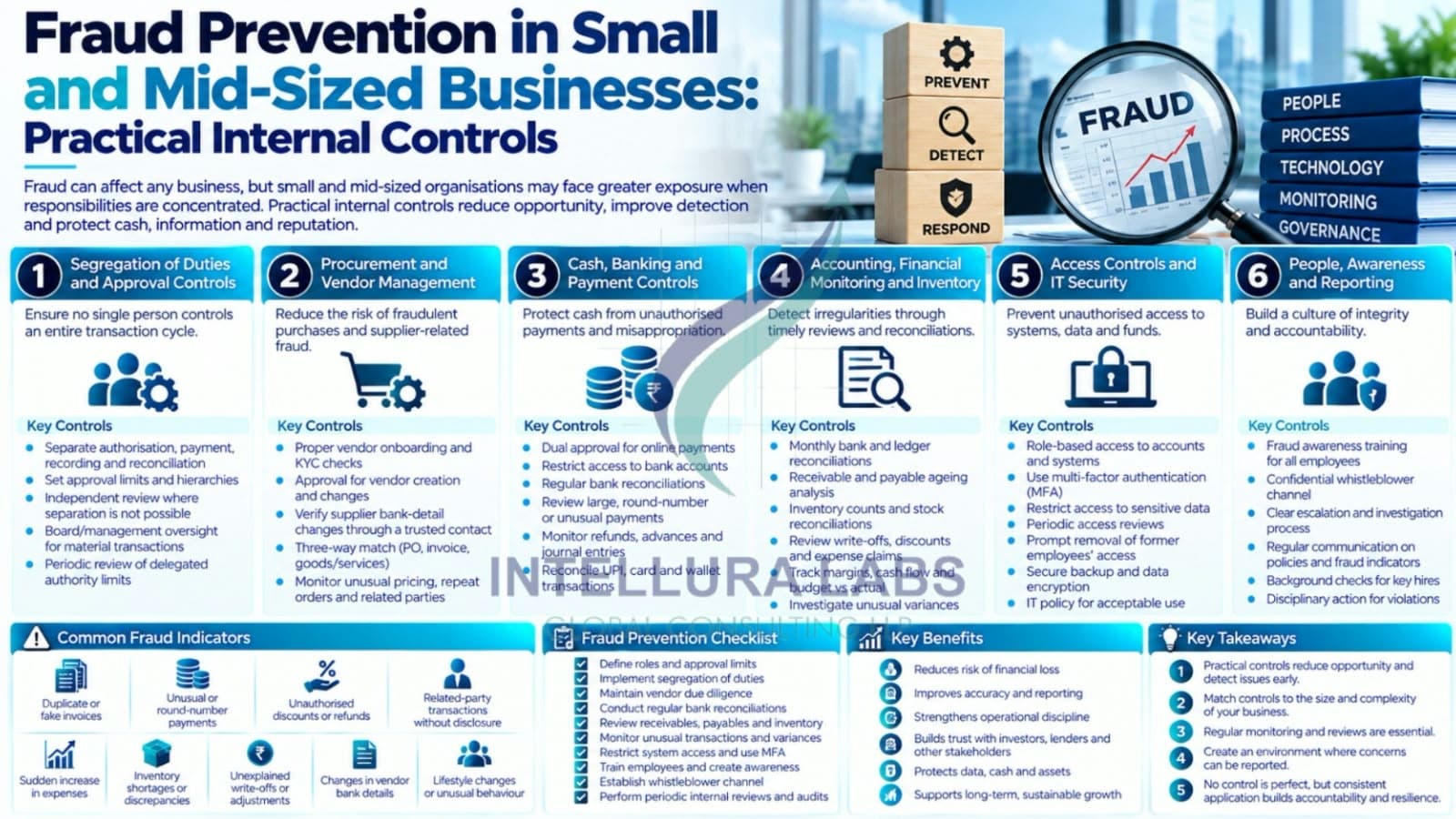
Fraud Prevention in Small and Mid-Sized Businesses: Practical Internal Controls
Fraud can affect any business, but small and mid-sized organisations may face greater exposure when responsibilities are concentrated. Practical controls reduce opportunity, improve detection and protect cash, information and reputation.
Segregation of duties is fundamental. Different people should handle authorisation, payment, recording and reconciliation. Where separation is impractical, owners should independently review bank statements, payments and accounting entries.
Businesses should set approval limits for purchases, discounts, refunds, vendor creation and online payments. Supplier bank-detail changes must be verified through a trusted contact, not email alone.
Regular bank reconciliations, receivable reviews, inventory counts and expense checks can reveal duplicate invoices, round-number payments, unexplained write-offs, sudden discounts and unusual transactions.
Access controls matter. Banking credentials, accounting systems, customer data and sensitive files should be restricted by role. Multi-factor authentication and prompt removal of former employees’ access reduce digital risk.
A confidential reporting channel and investigation process encourage early reporting. Training should explain fraud indicators, conflicts and escalation.
Controls should match business size and be reviewed as operations change. No control is perfect, but consistent review creates accountability. Practical controls help businesses prevent losses, respond to warning signs and strengthen operational discipline.