What Investors Examine Before Signing a Term Sheet
See what investors review before signing a term sheet—from revenue quality and unit economics to governance, compliance, scalability, and key risks.
By CA Aswin
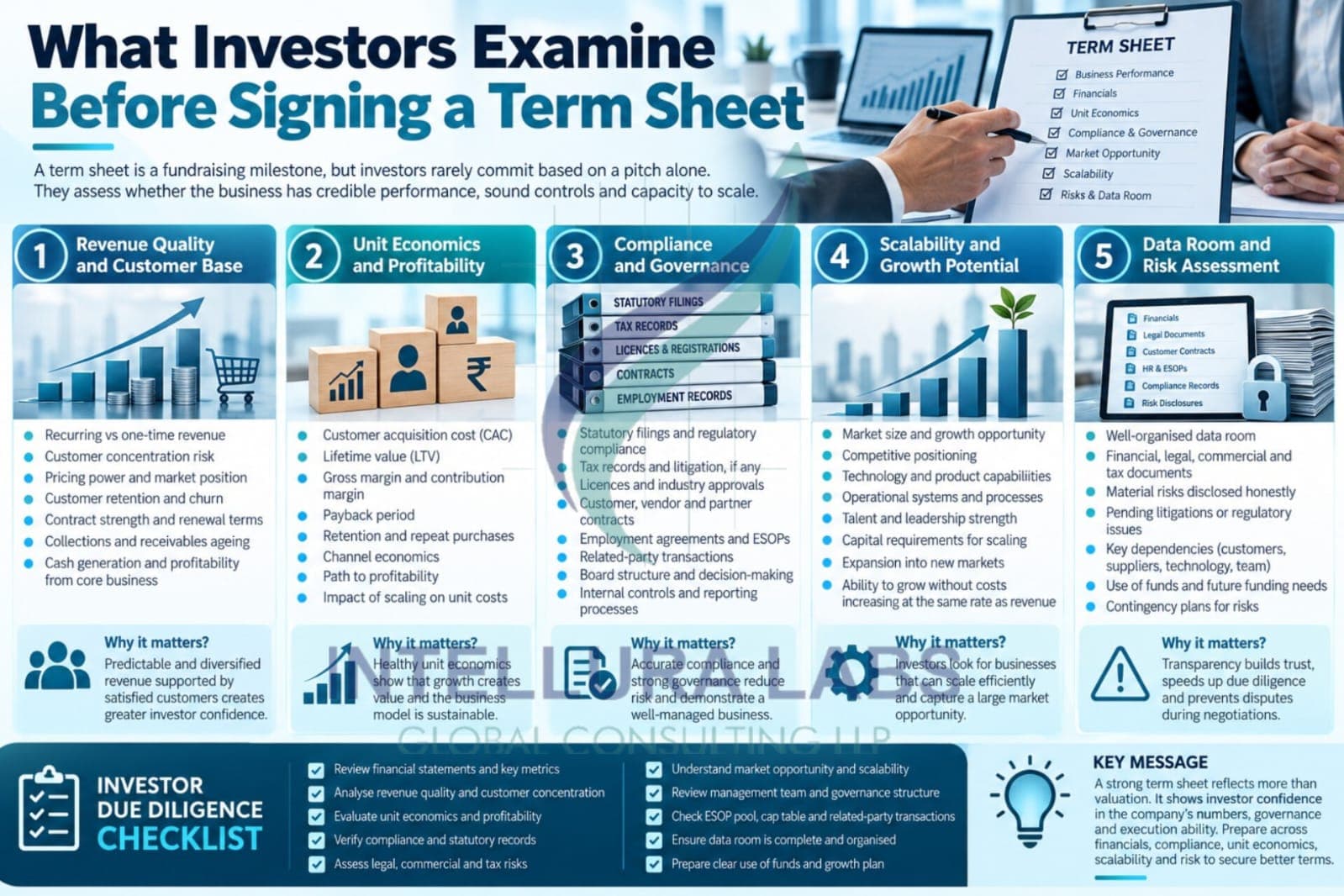
What Investors Examine Before Signing a Term Sheet
A term sheet is a fundraising milestone, but investors rarely commit based on a pitch alone. They assess whether the business has credible performance, sound controls and capacity to scale.
Revenue quality is critical. Investors examine recurring revenue, customer concentration, pricing power, churn, contract strength, collections and cash generation. Predictable revenue supported by satisfied customers generally creates greater confidence than one-time sales.
Unit economics reveal whether growth creates value. Customer acquisition cost, lifetime value, gross margin, contribution margin, payback period and retention show whether the business model is sustainable. Rapid growth without healthy economics can increase risk.
Investors review compliance and governance, including statutory filings, tax records, licences, contracts, employment records and related-party transactions. Accurate reporting, clear decision-making and appropriate board oversight strengthen confidence.
Scalability depends on market opportunity, technology, operating systems, talent and capital requirements. Investors assess whether the business can grow without costs increasing at the same rate as revenue.
Founders should prepare a data room and disclose material risks honestly. Transparency can prevent disputes and support negotiations. A strong term sheet reflects more than valuation; it reflects confidence in the company’s numbers, governance and execution ability.