How to Build a Financial Model That Can Survive Investor Due Diligence
Build an investor-ready financial model with clear assumptions, revenue drivers, scenarios, cash flow, and accurate projections that can withstand due diligence.
By CA Aswin
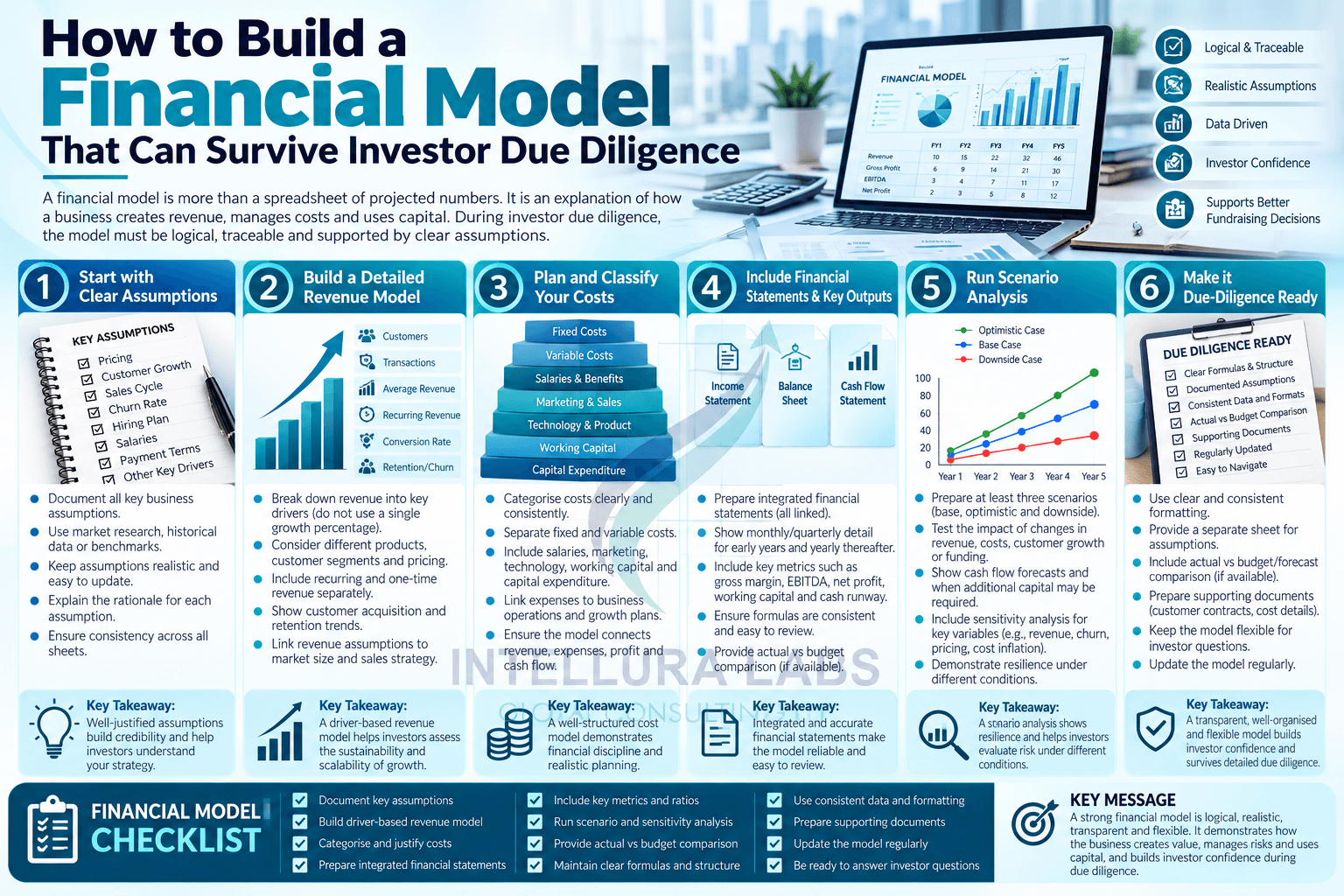
How to Build a Financial Model That Can Survive Investor Due Diligence
A financial model is a spreadsheet of projected numbers. It is an explanation of how a business creates revenue, manages costs and uses capital. During investor due diligence, the model must be logical, traceable and supported by assumptions.
Begin with assumptions. Founders should document pricing, customer growth, sales cycles, churn, hiring plans, salaries, payment terms and other drivers. Each assumption should have a reasonable basis and be easy to update.
Revenue drivers should be separated instead of a single growth percentage. The model may include customers, transactions, average revenue, recurring income, conversion rates and retention. This allows investors to understand what is driving growth.
Costs should be categorised, including fixed expenses, variable costs, salaries, marketing, technology, working capital and capital expenditure. The model should connect revenue, expenses, profit and cash flow to show timing.
Scenario analysis is important. Base, optimistic and downside cases help investors evaluate resilience under changing sales, costs or funding conditions. Cash-flow forecasts should show when the business may require capital.
A due-diligence-ready model includes clear formulas, consistent data, documented assumptions and actual-versus-budget comparisons. Accuracy, transparency and flexibility build confidence and support better fundraising.