Transfer Pricing for Growing International Businesses: What Should Be Documented?
Learn what growing international businesses should document for transfer pricing, including related-party transactions, functional analysis, pricing methods, comparables, and supporting records.
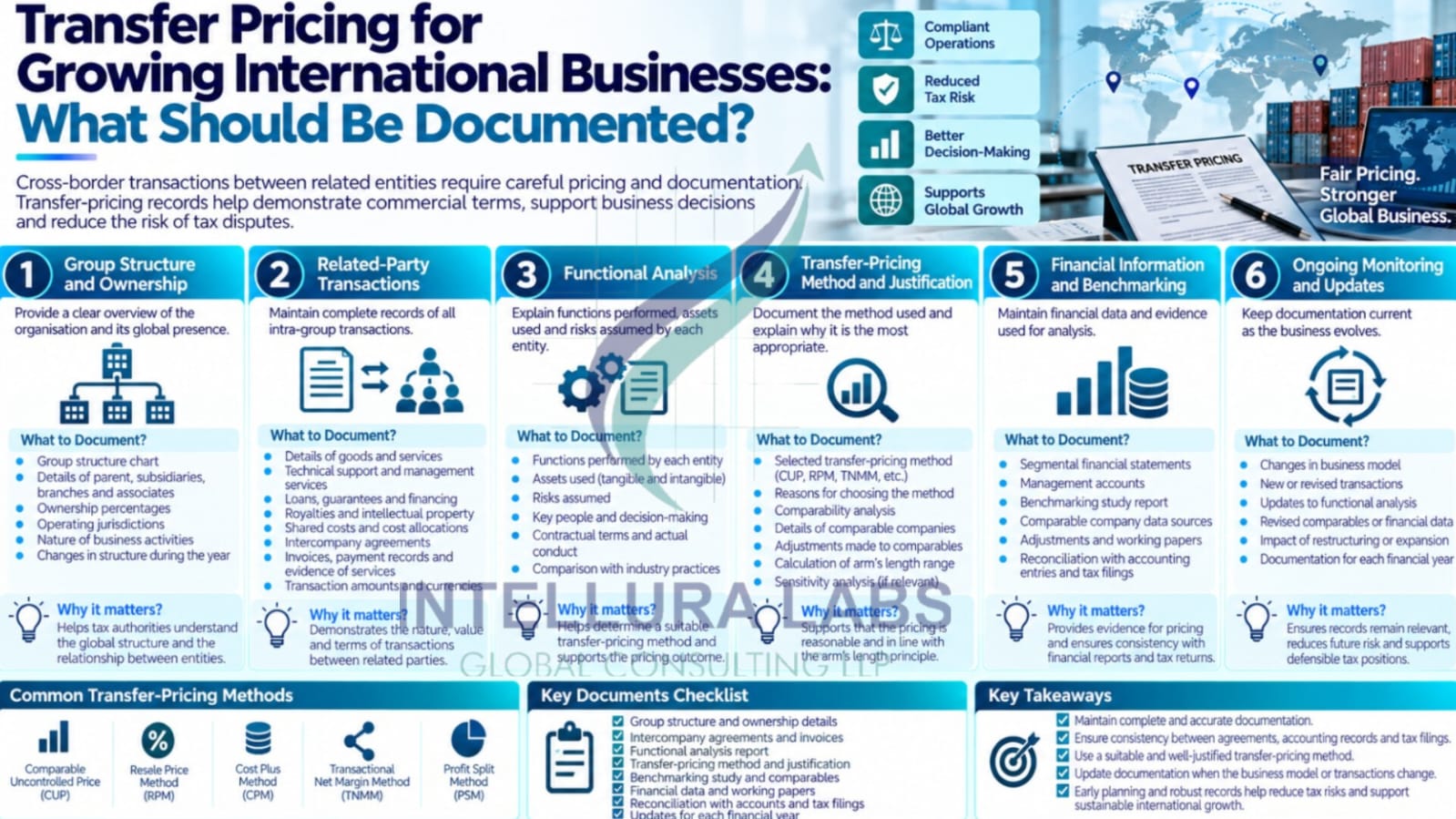
Transfer Pricing for Growing International Businesses: What Should Be Documented?
Cross-border transactions between related entities require careful pricing and documentation. Transfer-pricing records help demonstrate commercial terms and reduce the risk of tax disputes, especially where transactions are material or complex.
Documentation should describe the group structure, including the parent, subsidiaries, branches, ownership relationships and operating jurisdictions.
Businesses must maintain details of related-party transactions, including goods, services, technical support, loans, guarantees, royalties, shared costs and intellectual property. Agreements, invoices, payment records and evidence of services should support each transaction, including transaction amounts and currencies.
A functional analysis should explain functions performed, assets used and risks assumed by each party. The business should record the pricing method and why it is appropriate, together with relevant comparables.
Benchmarking studies, financial data, segmental accounts and adjustments should be preserved. Records should agree with accounting entries, tax filings and intercompany agreements.
Documentation is more than compliance. It helps management understand cross-border profitability, identify tax risks and support defensible decisions. Records should be updated when the business model, transaction terms or group structure changes, including for each financial year.
Early planning, accurate data and consistent documentation reduce uncertainty and support sustainable, long-term international business growth.