The Most Common Cap Table Mistakes Startups Should Avoid
Avoid common startup cap table mistakes, including founder ownership issues, ESOP dilution, and convertible note errors.
The Most Common Cap Table Mistakes Startups Should Avoid
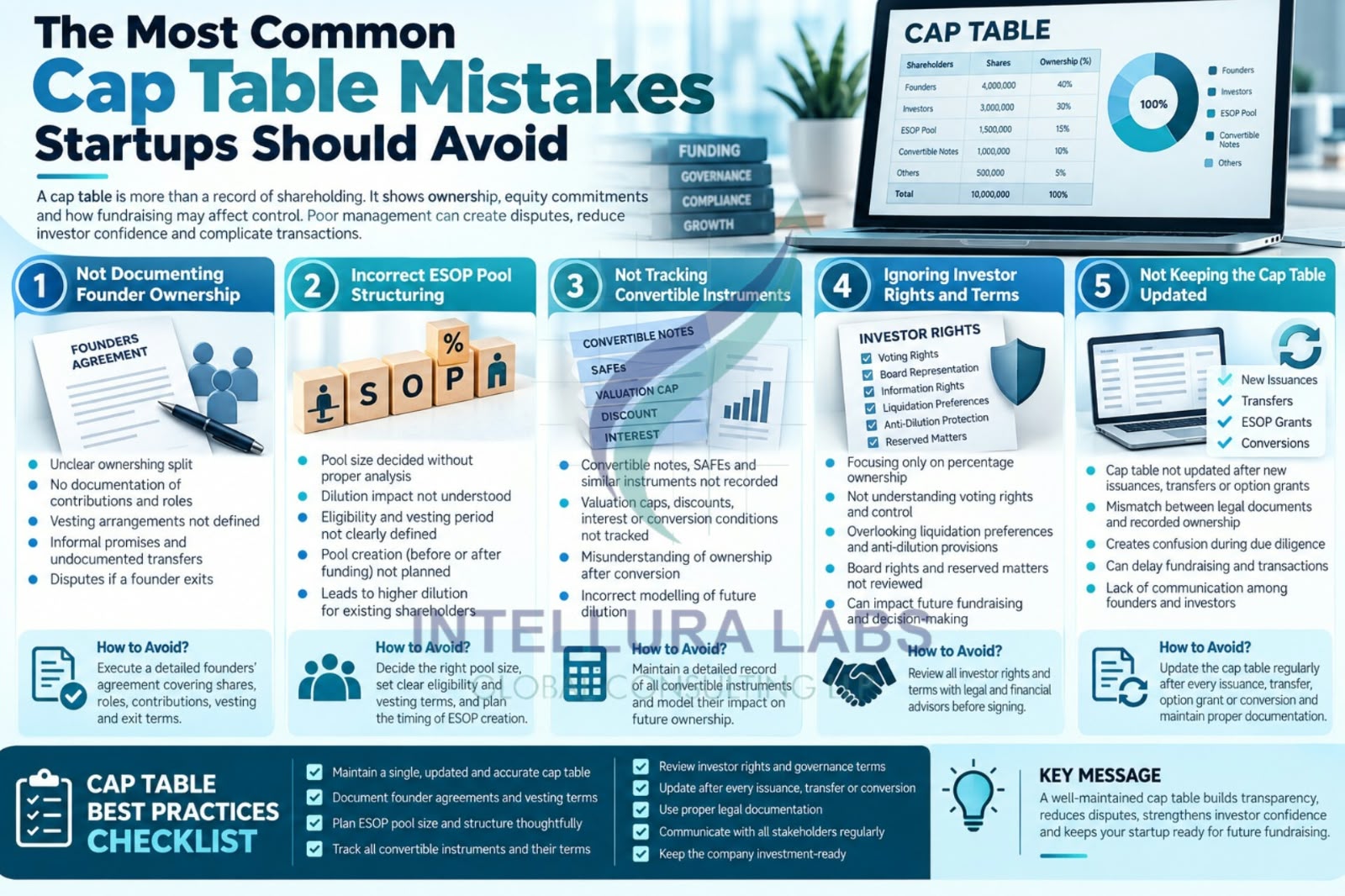
A cap table is more than a record of shareholding. It shows ownership, equity commitments and how fundraising may affect control. Poor management can create disputes, reduce investor confidence and complicate transactions.
A mistake is failing to document founder ownership. Founders should agree on contributions, roles, vesting arrangements and the treatment of shares if a founder exits. Informal promises and undocumented transfers can create due-diligence problems.
Another issue is creating an ESOP pool without understanding its dilution effect. Founders should decide the pool size, eligibility, vesting period and whether it is created before or after a funding round. These terms affect ownership.
Convertible instruments require tracking. Convertible notes, SAFEs and similar arrangements may carry valuation caps, discounts, interest or conversion conditions. If not recorded accurately, founders may misunderstand their ownership after conversion.
Investor rights must be reviewed alongside percentage ownership. Voting rights, board representation, information rights, liquidation preferences, anti-dilution protection and reserved matters can influence control and fundraising.
The cap table should be updated after every issuance, transfer, option grant or conversion. Proper legal documentation, regular review and communication help protect founder relationships and keep the company ready for investment.