Revenue Is Growing, but Cash Is Falling: Understanding the Difference
Revenue growth doesn’t always mean healthy cash flow. Learn why cash can fall despite rising sales and how better collections, working-capital control, and cash forecasting can protect liquidity.
Revenue Is Growing, but Cash Is Falling: Understanding the Difference
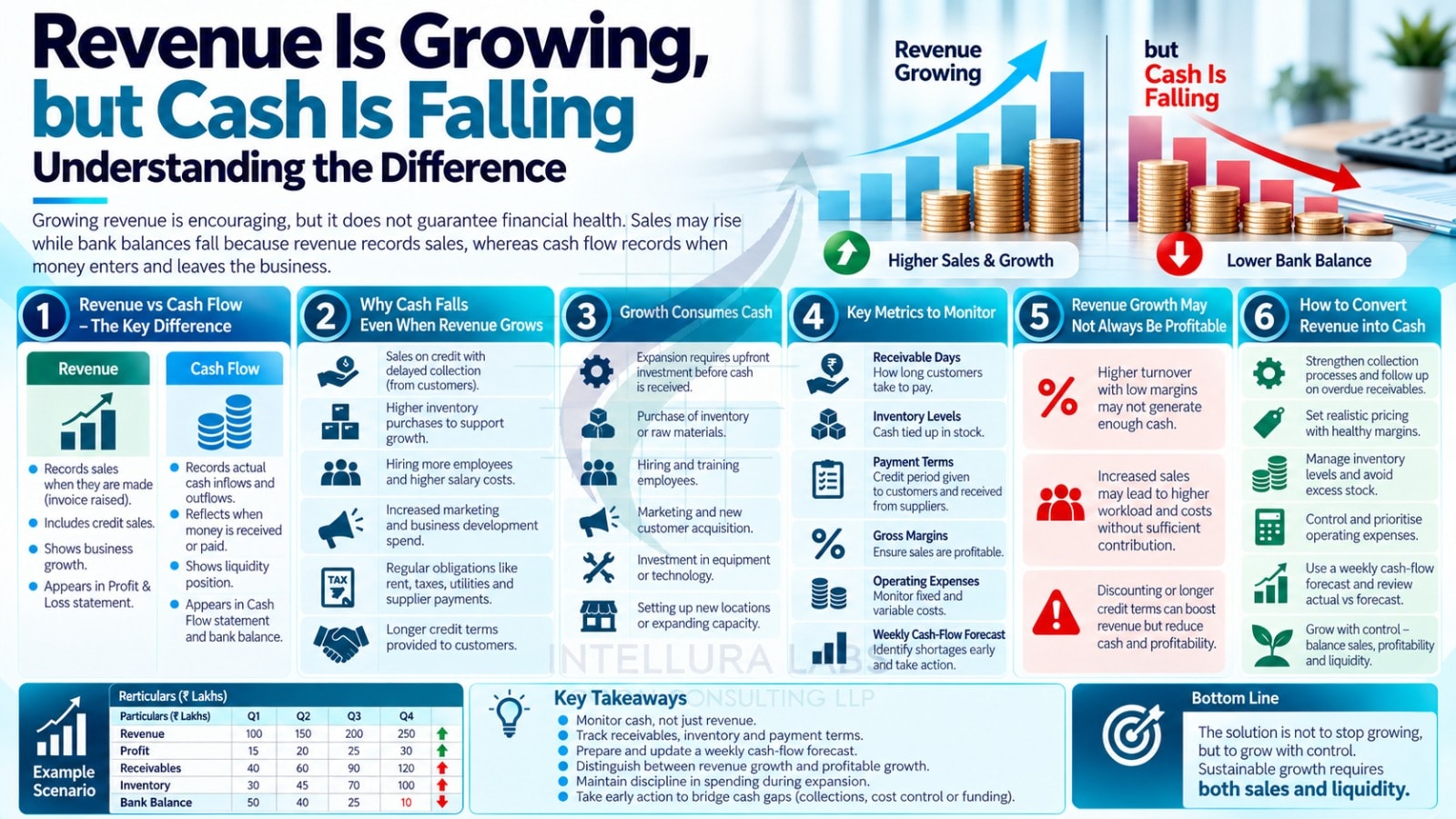
Growing revenue is encouraging, but it does not guarantee financial health. Sales may rise while bank balances fall because revenue records sales, whereas cash flow records when money enters and leaves the business.
A business may record sales on credit but wait weeks or months for collection. Delayed payments keep cash tied up in receivables, while salaries, rent, taxes and supplier invoices still require immediate payment.
Growth can also consume cash. A company may need to purchase inventory, hire employees, invest in marketing or offer longer credit terms before receiving customer payments. Expansion without working-capital planning can create pressure.
Founders should monitor receivable days, inventory levels, payment terms, gross margins and operating expenses. A weekly cash-flow forecast can reveal shortages and help management prioritise payments, accelerate collections or arrange funding.
It is important to distinguish profitable revenue from low-margin sales. Higher turnover may increase workload without creating enough contribution to cover costs.
The solution is not to stop growing, but to grow with control. Strong collection processes, realistic pricing, disciplined spending and regular actual cash reviews help convert revenue into usable cash. Sustainable growth requires both sales and liquidity.