India–UAE Business Expansion: Structuring Decisions Before Incorporation
Explore key India–UAE business expansion decisions covering ownership, tax, incorporation, banking, operations, and cross-border compliance before setting up a UAE entity
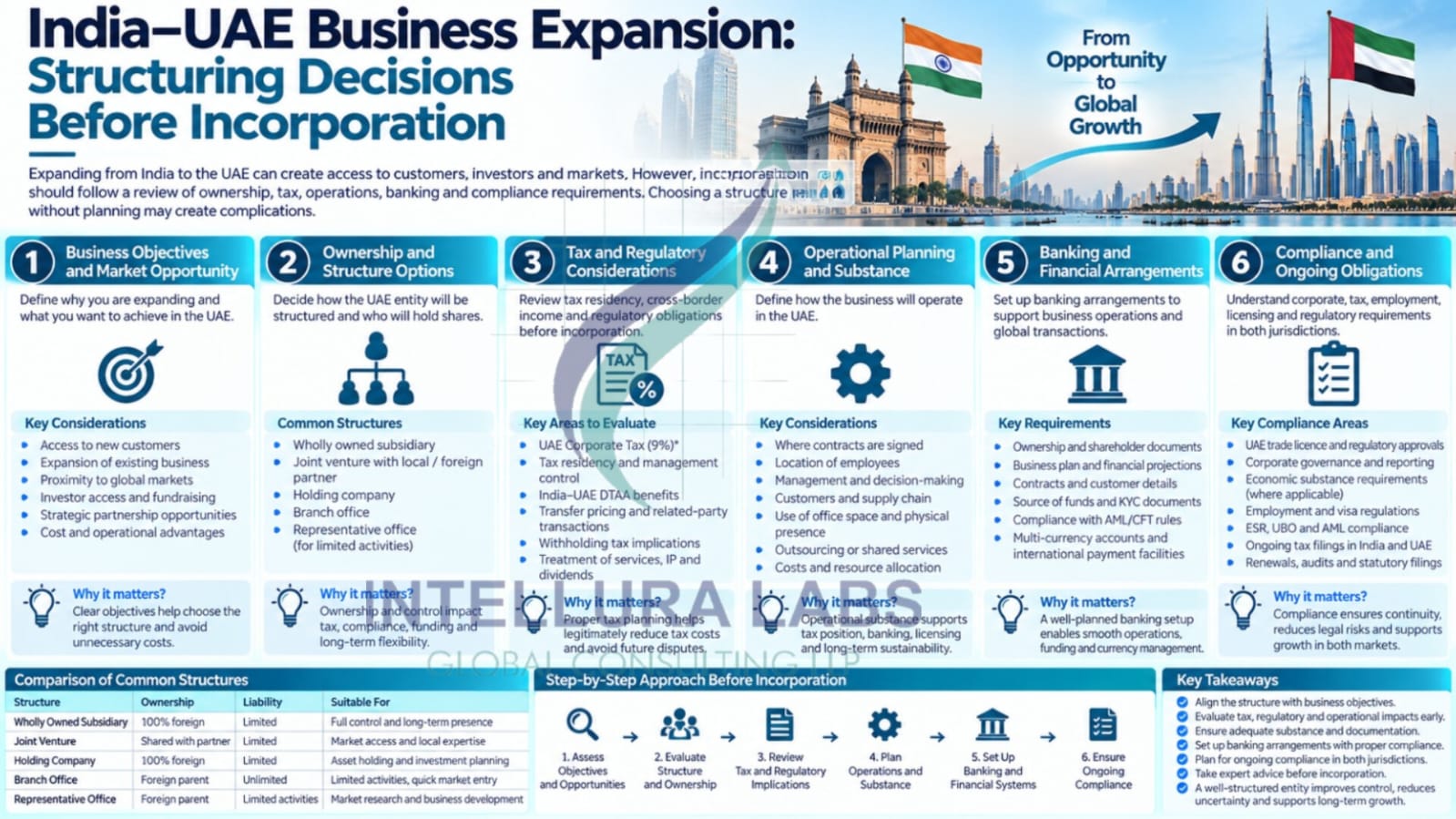
India–UAE Business Expansion: Structuring Decisions Before Incorporation
Expanding from India to the UAE can create access to customers, investors and markets. However, incorporation should follow a review of ownership, tax, operations, banking and compliance requirements. Choosing a structure without planning may create complications.
Ownership is a key decision. Promoters should determine who will hold shares, where management control will sit and whether the UAE entity will operate as a subsidiary, holding company, branch or venture. It should match objectives and funding plans.
Tax residency and cross-border income require review. Management and control, activities, related-party transactions, transfer pricing and treaty provisions may affect tax outcomes. Advice should be obtained before transfers of funds, intellectual property or services between entities.
Operational planning is important. The business should define where contracts are signed, employees are located, decisions are made, customers are served and costs are incurred. These factors influence substance and reporting.
Banking arrangements should support business flows, currency needs, controls and documentation. Banks may require ownership records, business plans, contracts and source-of-funds evidence.
Finally, founders must map corporate, tax, employment, licensing and regulatory compliance in both jurisdictions. A structure improves control, reduces uncertainty and supports expansion between India and the UAE.