Holding Company or Operating Company? Choosing the Right Business Structure
Holding Company or Operating Company? Choosing the Right Business Structure Choosing between a holding company and operating company is important for founders and business groups. The right arrangement depends on ownership, risk, investment plans, asset protection, tax and expansion. This choice can also significantly affect fundraising, succession planning, governance and future transactions. An operating company runs the business. It signs contracts, employs staff, uses operating assets, earn
Holding Company or Operating Company? Choosing the Right Business Structure
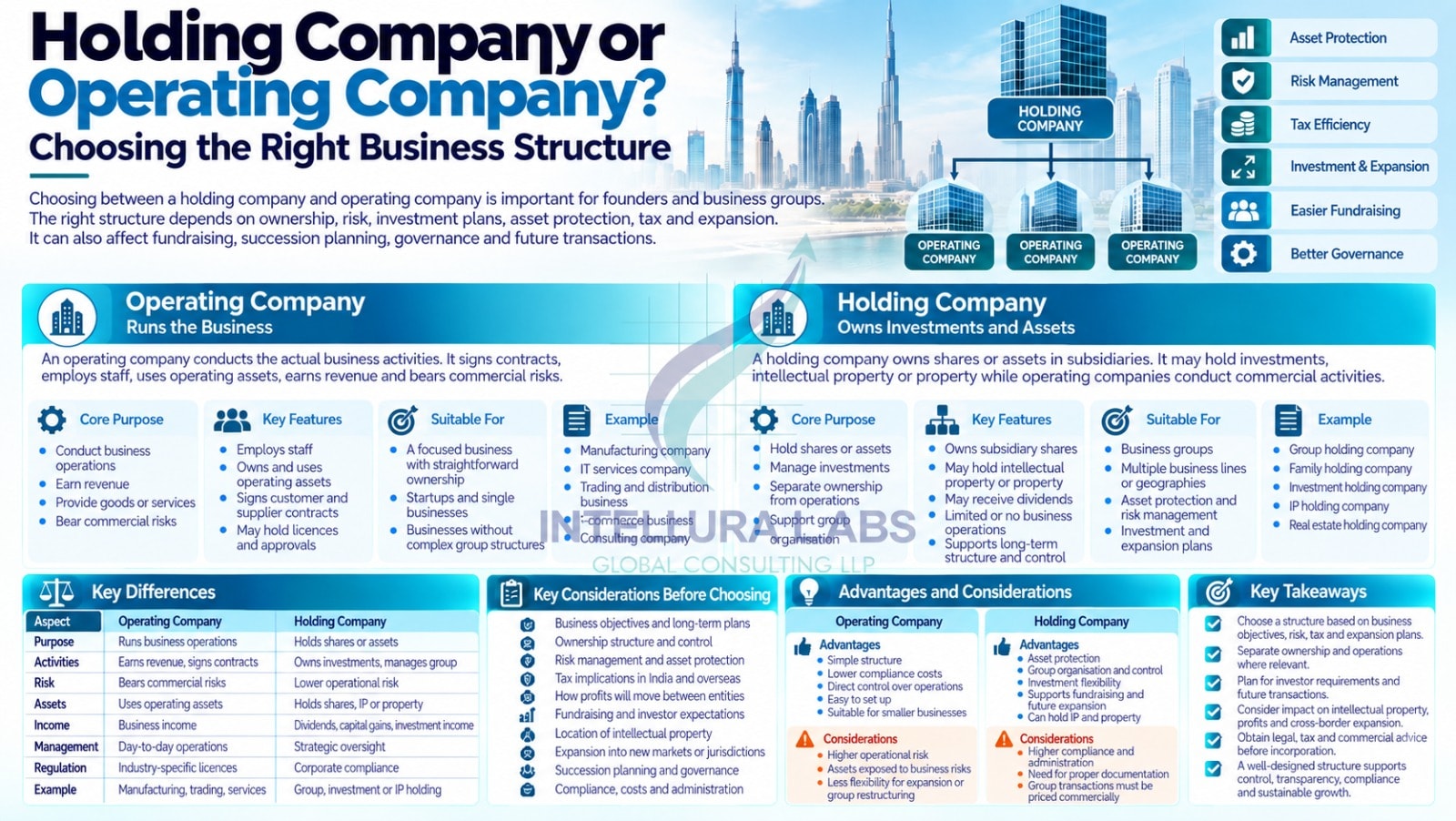
Choosing between a holding company and operating company is important for founders and business groups. The right arrangement depends on ownership, risk, investment plans, asset protection, tax and expansion. This choice can also significantly affect fundraising, succession planning, governance and future transactions.
An operating company runs the business. It signs contracts, employs staff, uses operating assets, earns revenue and bears commercial risks. It may suit a focused business with straightforward ownership.
A holding company owns shares or assets in subsidiaries. It may hold investments or property while operating companies conduct commercial activities. Separating ownership from operations can support risk management, group organization and investment flexibility.
However, a holding structure adds administration. Each entity may require separate accounts, filings, bank arrangements, agreements and compliance. Group transactions should be documented and priced commercially.
Founders should consider where decisions are made, how profits move, who owns intellectual property, how investors enter and whether the business may expand into new jurisdictions. Legal, tax and commercial advice should be obtained before incorporation.
A well-designed structure should support control, transparency, compliance and growth without unnecessary complexity or cost.